04 / 04Android · Home life

Making household responsibilities visible without turning them into another source of conflict.

An Android application that helps people living together organize household responsibilities through shared, visible agreements.

Product in development
Android · Home lifeMitad y Mitad

Product in development

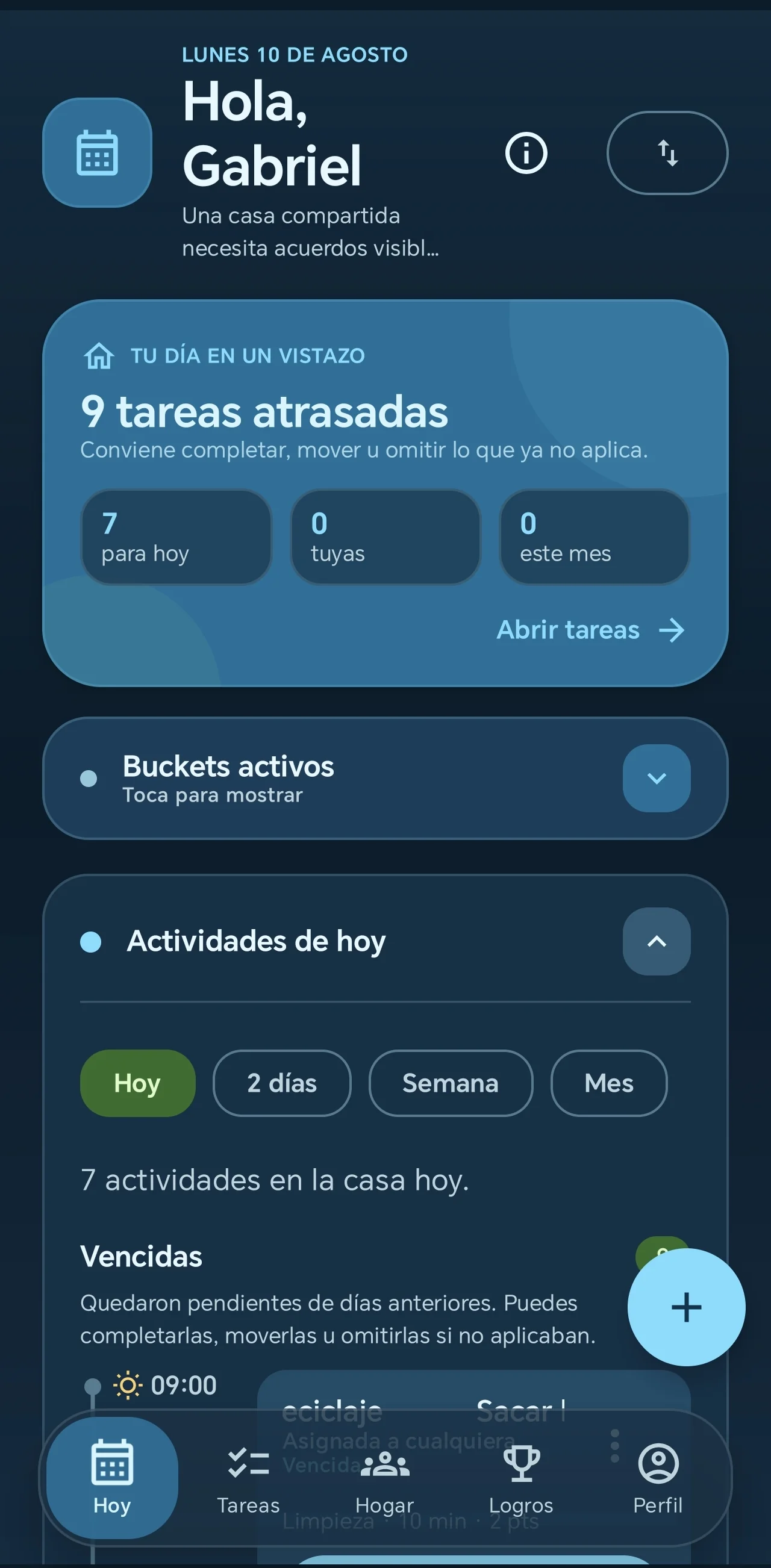
Today at a glance. The home view prioritizes overdue work, today’s activities, time ranges, and a direct path to adding a task.
01Today at a glance
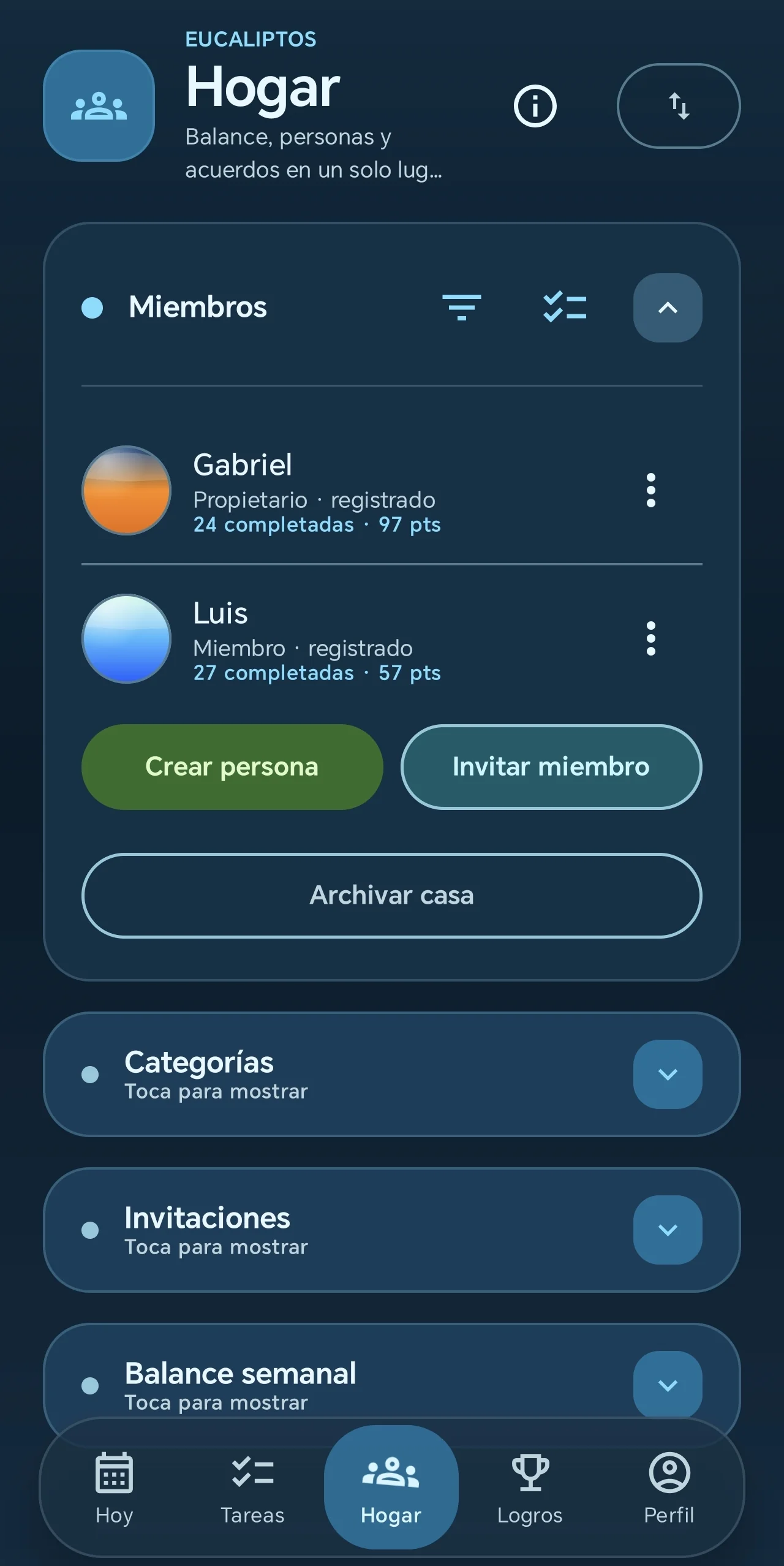
Household members. The household area makes membership, contribution points, invitations, categories, and weekly balance visible together.
02Household members
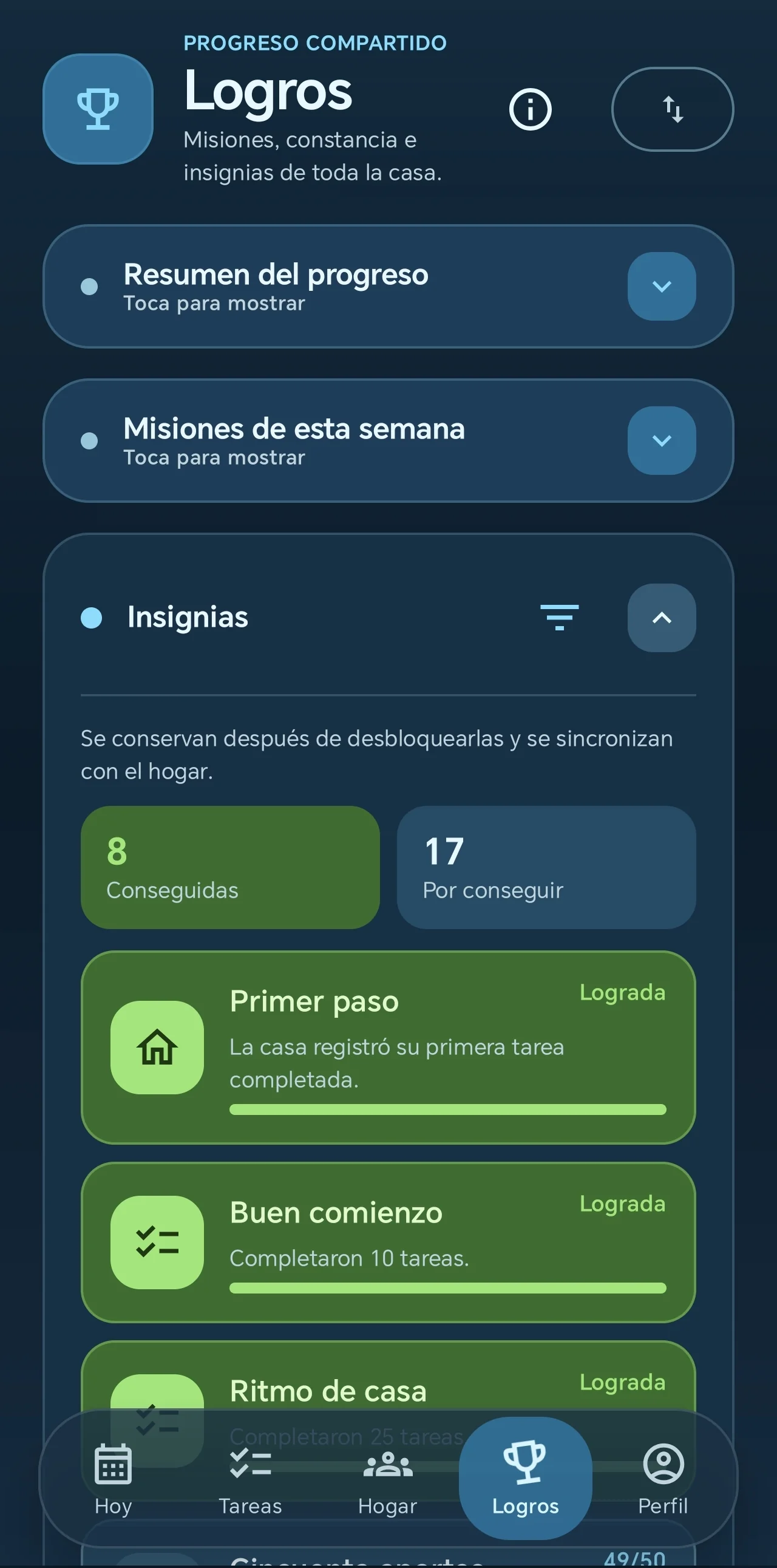
Achievements and progress. Weekly missions and badges turn shared consistency into visible progress without hiding the household purpose.
03Achievements and progress
PLATFORMAndroid
MY ROLEProduct Design · UX/UI · Android Development
TYPEPersonal project
VALIDATIONUser testing
01

The context

Household chores are simple individually but surprisingly difficult to coordinate. The problem is often not knowing that something needs to be done, but knowing who is responsible, when it should happen, whether it is complete, and whether the workload is balanced.

When agreements remain implicit, people can develop very different perceptions of how responsibilities are being shared.

A shared home needs visible agreements.
02

The challenge

I did not want to design another generic to-do list. Household tasks repeat, can be completed by different people, and need to adapt when someone is away or plans change.

Most importantly, the product should help coordination without making the home feel like a workplace dashboard.

How might we make household responsibilities easier to coordinate while keeping the experience collaborative rather than punitive?
03

Designing the household model

The first major decision was to make the home the central object instead of the individual user. A user can create a household and invite members with different levels of access, including guests and registered users.

This reflects the reality that a home can include people with different levels of technical involvement.

04

Designing recurring chores

A simple checkbox was not enough. Recurring chores may need to be skipped, moved, archived, or temporarily paused.

The system preserves the relationship between the original responsibility and each occurrence, maintaining history without recreating the same task manually.

  • Daily
  • Weekly
  • Monthly
  • Annually
05

Accountability without friction

The application shows who completed a task without turning every interaction into a competition. Members can record completion and, when needed, mark that another person completed it.

Points and lightweight gamification support motivation, but the main goal remains visibility: what needs attention, who is involved, and what has already been done.

06

Designing for real life

Household routines are rarely perfect, so edge cases became part of the main experience rather than afterthoughts.

  • A member being temporarily unavailable
  • A chore being skipped or moved
  • Recurring responsibilities changing
  • Members joining or leaving a household
  • A household changing ownership
  • Multiple devices updating shared information
07

Offline and synchronization

Because the product is mobile, connectivity cannot always be assumed. I explored how actions should behave offline and synchronize once connectivity returns.

This raised product questions about simultaneous completions, update priority, and how the interface communicates pending synchronization.

What should happen when two people complete the same chore from different devices?
08

Validation

I tested whether the household model and recurring task system were understandable, then refined information hierarchy and reduced ambiguity around task states.

  • Create or join a household
  • Understand assigned responsibilities
  • Complete and recognize a recurring chore
  • Identify who completed a task
  • Understand skipped or moved chores
  • Navigate shared household information
09

The outcome

Mitad y Mitad became a mobile system for coordinating shared responsibilities rather than simply recording tasks. Its core value comes from making agreements visible.

Households can manage members, recurring chores, task history, and completion while supporting the unpredictability of real routines.

WHAT I LEARNED

Lessons from
the process.

01

Everyday problems can hide complex systems

Recurrence, synchronization, and shared ownership introduce significant product complexity.

02

Collaboration requires careful language

Small wording choices can make an interface feel cooperative or accusatory.

03

Edge cases are part of the main experience

Vacations, skipped chores, and simultaneous actions are normal parts of household life.

04

Mobile UX and data architecture are connected

Recurring schedules and offline synchronization connect interface behavior to the data model.